

By Sam Horton (Guest Blog)
To an attorney, “causation” is often a binary switch: did event A lead to injury B? To a physician, however, causation is rarely linear. We are trained to see a “web” of competing probabilities, predispositions, and external variables.
When a medical expert sounds hesitant on the stand, they usually are not trying to be difficult; they’re just struggling to translate a complex biological narrative into a rigid legal framework. To bridge this gap, we must move beyond the “but-for” test and understand how clinical decision-making aligns—and sometimes clashes—with legal standards like “proximal/proximate cause” and “preponderance of evidence.”
To an attorney, causation is often a binary switch. To a physician, it is a web of competing probabilities.
1. The Statistical “More Likely Than Not.”
The legal standard—“more likely than not” or “preponderance of the evidence” (>50%)—is generally lower than the standard a physician uses. Evidence-based medicine requires a high statistical threshold, generally 95%, to establish a definitive causal link. To bridge this gap, attorneys must understand that clinical “certainty” is a benchmark, whereas “probability” or “more likely than not” is the practical standard for the courtroom. By framing the conversation around medical probability rather than absolute proof, attorneys allow clinicians to provide opinions that meet the requirements of civil litigation without violating their professional commitment to evidence-based medicine.
Pro Tip:
Medical experts are often nervous because they feel that saying something is “probable” or “more likely” makes them “unscientific” or “sloppy.” To put them at ease, consider verbiage such as this:
“Doctor, I want to clarify some ‘rules of the road’ for today. I understand that in your clinic or when publishing a paper, you look for near-absolute certainty—a 95% threshold. But the law doesn’t ask you to be a researcher today; it only asks you to be a clinician. In this room, ‘more likely than not’ is the finish line. If you are 51% sure based on your experience, you aren’t being unscientific; you are being legally accurate. Does that distinction help as we proceed?”
In the courtroom, ‘more likely than not’ is the finish line. If you are 51% sure, you aren’t being unscientific; you are being legally accurate.
2. The Clinical Mindset: Pathophysiology vs. Liability
In medicine, we think about differential diagnosis. Attorneys may struggle with this concept. A doctor’s job is to map out contributing factors and rule out the most dangerous possibilities first. An attorney’s job is to rule in the specific defendant. When a doctor lists “Degenerative Disc Disease,” “Uncontrolled diabetes,” and “Acute Trauma” on the same chart, they are documenting the various factors that may be contributing to the presentation.
For a physician, causation is viewed through the lens of pathophysiology. We look at:
- Predisposing factors: Genetics, age, lifestyle, past medical history
- Precipitating factors: The acute event or alleged negligence.
- Perpetuating factors: Poor follow-up, non-compliance, secondary infections
While the law seeks a “proximal/proximate cause”—the most direct and responsible factor—medicine views the body as a dynamic system where multiple causes often act in concert. To a doctor, saying one thing “caused” another may feel like an oversimplification of a complex biological narrative.
Pro-Tip: The Three Ps
When evaluating a case, filter the medical narrative through the Three Ps. This allows you to quantify the strength of your causation argument.
- Predisposing Factors: These are the “pre-existing” conditions (for example, a 30-year smoking history or strong family history).
- The Litmus Test: If these factors are overwhelming, your Precipitating event (the negligence) must be convincing to overcome the defense’s “inevitability” argument.
- Precipitating Events: This is the “trigger”—the specific act of alleged negligence.
- The Litmus Test: You are looking for a clear “but-for” link. Yet, was the claimant essentially a “walking time bomb” because of these predisposing factors?”
- Perpetuating Factors: These are the elements that prevented recovery
- The Litmus Test: Use these to counter the defense’s “intervening cause” theories.
The Attorney’s Bottom Line: When Predisposing factors are heavy, the “hill to climb” for legal causation grows exponentially steeper. Framing your discovery around these three pillars ensures you aren’t blindsided by a defense expert’s “it was bound to happen anyway” testimony.
When the ‘hill to climb’ for legal causation grows steeper, framing your discovery around the Three Ps ensures you aren’t blindsided by an ‘it was bound to happen anyway’ defense.
3. Deterministic vs. Probabilistic Models
The legal system often relies on a deterministic model: If I hit a ball with a bat, the bat caused the ball to move. Medicine uses a probabilistic model: If I smoke, I increase the risk of lung cancer, but I am not guaranteed to get it.
Bridging this gap requires experts who can articulate Attributable Risk to a jury.
Pro-Tip: The “But-For” Bridge
A legal goal may be toshow that the injury would not have occurred but for the defendant’s conduct. While medicine deals in ‘increased chances,’ when the Attributable Risk exceeds 50%, it moves from a ‘possibility’ to a ‘medical probability.
- How to use this in a Deposition:
When the defense attorney tries to trap your expert by saying, “But Doctor, you can’t say with 100% certainty that the smoking didn’t cause the cancer, right?” Your expert should respond, “I can’t give you 100% scientific certainty, but I can give you the Attributable Risk. The data shows that more than 50% of the risk is from chemical exposure, not smoking.”
4. The Role of Temporal Proximity
A common pitfall in medicolegal cases is the post hoc ergo propter hoc fallacy: “After this, therefore because of this.”
Just because a patient developed a headache after taking a new pill doesn’t mean the pill caused the headache. Physicians look for:
- Temporal Consistency: Does the timeline make biological sense?
- Biological Plausibility: Does the pill work in a way that may cause a headache?
- Dose-Response Relationship: Does more of the “cause” lead to more of the “effect”?
Attorneys often lean heavily on temporal proximity because it is easy for a jury to grasp. However, a physician will poke holes in this if the biological mechanism doesn’t support the timeline.
Pro-tip:
When you are dealing with a defense expert who is trying to debunk your “After this, therefore because of this” argument, don’t just fight them on the timeline. Use their own medical standards (Temporal Consistency, Biological Plausibility, and Dose-Response) to box them in.
The Tactic: The “Incremental Concession” Instead of arguing that the pill caused the headache, force the expert to admit the possibility of each of the three pillars individually. This prevents them from dismissing the case as a simple logical fallacy.
- Step 1 (Plausibility): “Doctor, putting this specific patient aside, is it biologically possible for this class of drug cause a headache?”
- Step 2 (Dose-Response): “And if a patient took a double dose, would you expect those vascular effects to be more pronounced?”
- Step 3 (The Pivot): “So, if we have a biological mechanism that is possible, and we have a timeline that matches perfectly, you aren’t saying it’s impossible tha tthe drug caused the headache—you’re just saying you can’t be 100% certain, correct?”
Why it works: This prevents the expert from dismissing your case as a “logical fallacy.” By the time you reach the “Pivot,” the expert has already validated the science behind your theory. You have successfully shifted the burden from “is this a coincidence?” to “why is this not the cause?”
Ultimately, bridging the causation gap is about translation, not transformation. You are not asking a physician to abandon their scientific integrity; you are asking them to apply their clinical expertise within the specific, structured parameters of the law. By mastering the “Three Ps,” understanding the statistical thresholds of probability, and grounding temporal claims in biological plausibility, you transform a hesitant medical expert into a powerful, credible educator for the jury. Success is found when the attorney stops pushing for “certainty” and starts building a narrative of “probability” that is medically sound and legally sufficient.
Final Pro-Tip: The “Exit Interview”
When working with an expert, ask them one final question to ensure they are comfortable. “Doctor, if a peer in your field were to read your testimony, would they feel you stayed true to the science, even though we are using legal standards?”
If the answer is “Yes,” you have a witness who will be bulletproof on cross-examination. If the answer is “I’m not sure,” go back to the Attributable Risk and Biological Plausibility —you still have a “Causation Gap” to bridge.
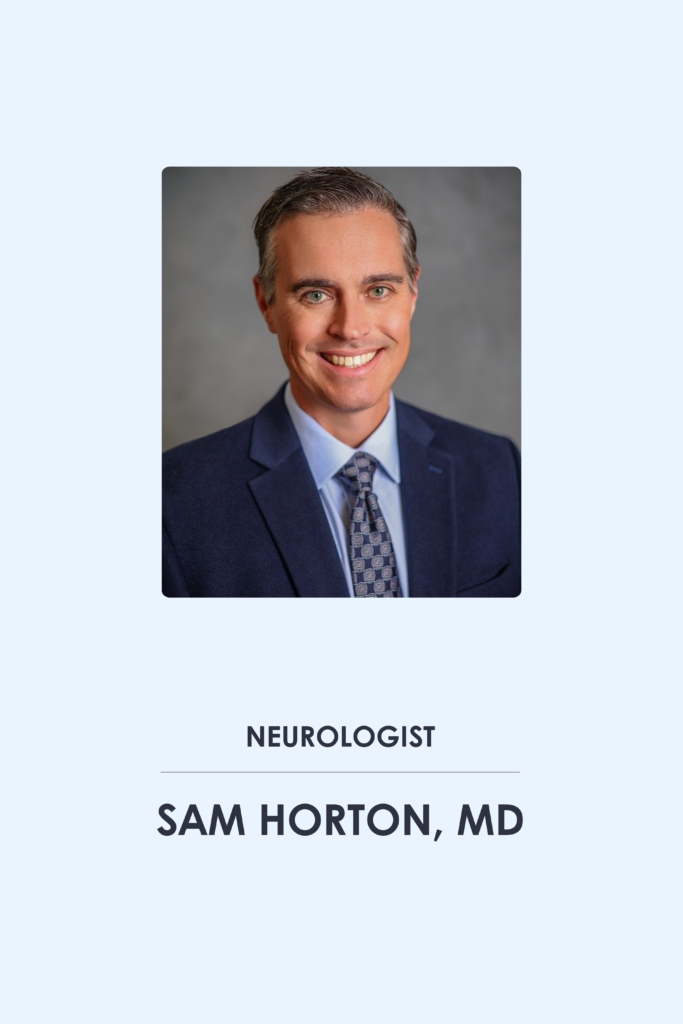
Sam Horton, MD, is a board-certified neurologist and sleep medicine specialist practicing in Carmel, Indiana, just north of Indianapolis. He has over 16 years of experience in general neurology, sleep medicine, and electrodiagnostic testing (EMG/EEG). He specializes in neuromuscular disorders, headache disorders, movement disorders, concussion management, and other complex neurological conditions.Recognized as an Optum Physician Partner since 2021, Dr. Horton has demonstrated excellence in patient care and leadership, including serving as a former Sleep Lab Medical Director. He is also a dedicated educator, mentoring medical students and advancing neurological care.
Disclaimer: The views and opinions expressed in this article are those of the author and do not necessarily reflect those of High Rock Experts®. This content is for educational and informational purposes only and does not constitute medical or legal advice.