

What I Wish I Knew Before My First Expert Witness Case
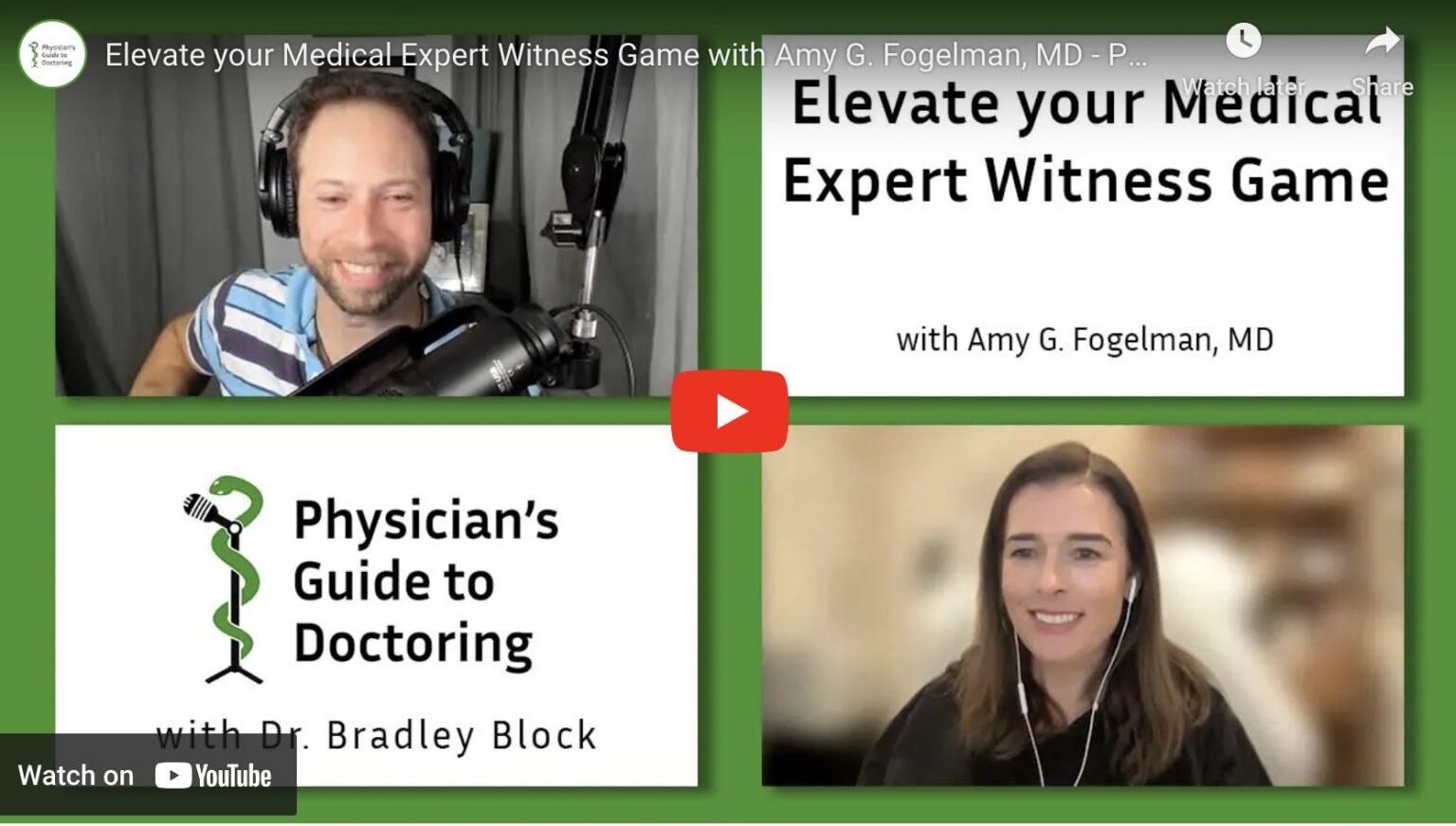
A recap of my second appearance on Physician’s Guide to Doctoring with Bradley Block, MD
Most physicians do not plan a career in medical-legal work. They fall into it. A colleague forwards a case. An attorney calls. Someone says your name in a room you were not in.
That is exactly how it happened to me, and it is how it happens to most of the clinicians I train.
I sat down again with Bradley Block, MD, host of Physician’s Guide to Doctoring, to talk about the part nobody prepares you for: what actually happens after you say yes. We covered my first case, my first case that went to trial, what I would do differently if I could start over, and how to build a CV that attorneys take seriously.
Here is what we covered, and what I want every clinician to take from it.
Your first case is usually one you cannot talk about
Bradley asked about my first case. I could only say so much.
That surprises people, so it is worth explaining. Most expert witness work is confidential. You sign a retainer agreement. You review records covered by protective orders. Many cases settle quietly or get dropped, and the file never becomes public. Even years later, you cannot use the details in a talk, a blog post, or a marketing bio.
The exception is trial. When a case is tried in open court, the testimony becomes part of the public record. That is why I can talk about my first trial in a way I cannot talk about my first case.
This matters more than it sounds. New experts often assume they will build a portfolio of stories to share. You will not. What you build instead is a track record that lives in attorneys’ memories and in your own experience. Plan your marketing around your qualifications and your process, not around case details you are not free to discuss.
What I would do differently
Bradley asked what I would change about my early career. My honest answer: I would have treated this as a business from day one.
For years I did expert work the way most physicians do. Reactively. A case came in, I reviewed it, I sent an invoice, I moved on. I had no fee schedule. No engagement letter of my own. No system for tracking time. No plan for where the next case would come from.
The medicine was never the hard part. I knew how to analyze a chart. What I did not know was everything around the medicine: how to price my time, how to protect myself contractually, how to communicate with an attorney who thinks very differently than I do, and how to make sure a good case turned into a second case.
That gap is the reason High Rock Academy exists. The clinical expertise is already yours. The business infrastructure is what has to be built.
What to do when your first case actually arrives
Bradley put it plainly: what should he do when he gets his first case?
Here is the short version.
Run a conflict check before anything else. Have you treated this patient? Do you know the defendant? Did you train with them? Do you work in the same system? Say so immediately. A conflict you disclose is a non-issue. A conflict discovered later can end the engagement and damage your reputation.
Get the scope in writing. What are you being asked to opine on? Standard of care? Causation? Damages? Do not accept a vague assignment. Ambiguity at the start becomes a problem on cross-examination.
Have a fee agreement and a retainer. Set your hourly rate for review, for deposition, and for trial before you are asked. Collect a retainer up front. This is standard practice, and attorneys expect it.
Read everything, then form your opinion. Not the other way around. If the records do not support the opinion the attorney was hoping for, say so early. Attorneys value an expert who tells them the truth in week one far more than one who tells them what they want to hear and falls apart in deposition.
Stay inside your expertise. The fastest way to lose credibility is to opine on something outside your training. It is always acceptable to say that a question falls outside your scope.
Your CV is not your academic CV
We spent real time on this, because it is one of the most common and most fixable mistakes.
The CV that got you an academic promotion is not the CV that gets you hired for medical-legal work. Attorneys are reading for different things, and they are reading fast.
What attorneys look for:
- Board certification and the dates it was earned and renewed
- Active clinical practice, including where and how often
- State licenses and their status
- Clear evidence that you currently do the thing the case is about
- Teaching, supervision, and hospital roles that show you set standards for others
- Publications relevant to the issue in the case
What creates problems:
- Unexplained gaps in dates
- Anything ambiguous or inflated, because opposing counsel will find it
- Twenty pages of committee work that buries the relevant clinical detail
- A listing of prior testimony that is incomplete or out of date
Assume every line will be read out loud and questioned. Write it that way.
Takeaways for clinicians
- Confidentiality is the default in this work. Build your visibility on your credentials and your process, not on case stories.
- The medicine is the easy part. The business systems are what determine whether you get a second case.
- Do the unglamorous things first: conflict check, written scope, fee agreement, retainer.
- An honest early opinion is worth more to an attorney than a favorable one.
- Rebuild your CV for a legal reader, not an academic one.
The larger point
Expert witness work does not require you to leave medicine. It requires you to use what you already know in a setting that asks different questions of you.
Courts need physicians who can explain medicine clearly and honestly. That is the job. Credibility is the product.
If you are earlier in this than I was when I started, you do not have to learn it case by case the way I did.
Listen to the full episode: Elevate Your Medical Expert Witness Game on Physician’s Guide to Doctoring
Ready to build your expert witness practice the right way? Learn more about High Rock Academy and Basics for Becoming a Medical Expert Witness, or book a strategy call.
Need a medical expert for a case? Search the High Rock Experts Directory or request a physician-led custom expert match.
About Dr. Amy Fogelman
Amy G. Fogelman, MD trains clinicians to become medical experts attorneys actually hire.
She is the founder of High Rock Experts® and High Rock® Academy. Since 2018, Dr. Fogelman has matched more than 800 medical experts with attorneys nationwide and trained more than 200 clinicians in expert witness work.
Through High Rock® Academy, she teaches clinicians how to evaluate cases, communicate with attorneys, write clear and defensible opinions, establish professional boundaries, and build the skills and credibility attorneys expect from medical experts.
Updated August 2026 to reflect the company’s current name and services